Valencia Old Town Walking Guide: Landmarks in One Day
The Mediterranean breeze carries the scent of orange blossoms and sea salt through streets that have witnessed over two thousand years of conquest, trade, and triumph. If you are designing a grand European itinerary for 2026—perhaps tracing a route from Paris to Barcelona, down the coast to Valencia, and onward to Madrid or Lisbon—you are embarking on one of the most rewarding travel paths in the world.
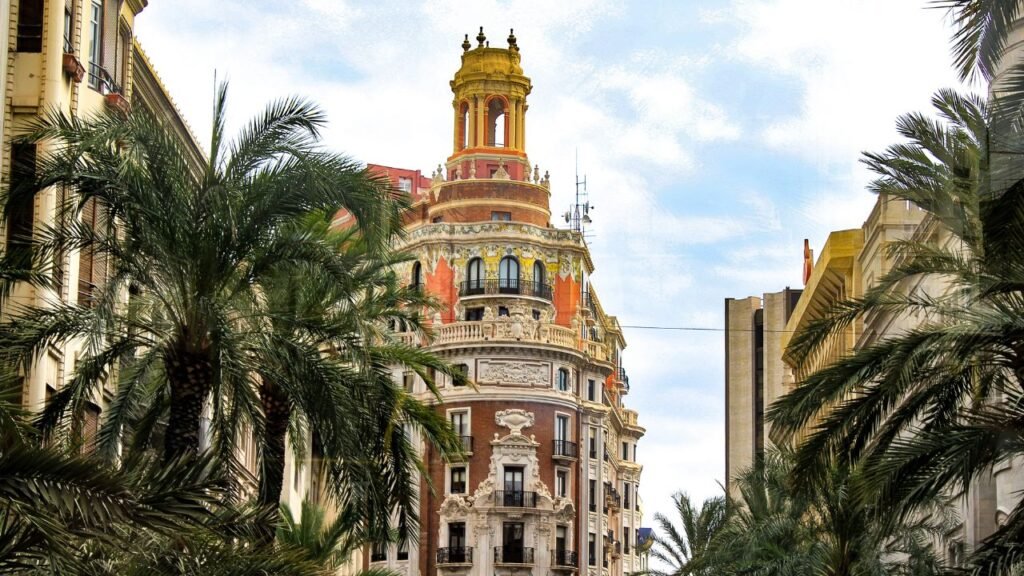
While millions of visitors flock to Spain’s two largest metropolises, the true connoisseur of culture knows that Valencia offers a profound, immersive journey. It is a city that does not merely display its history in glass cases; it wears its ancient Roman foundations, Moorish influences, and Gothic triumphs openly.
For the modern explorer looking to book private tours and ensure their journey is protected by premium travel insurance, Valencia is the ultimate investment of your time. Here is the definitive guide to Valencia’s captivating history and the seven most famous landmarks you must experience.
The Foundation: A Brief History of Valencia
To understand Valencia’s landmarks, you must understand the blood and gold that built them. Founded by the Romans in 138 BC as Valentia Edetanorum (meaning “valor” or “courage”), the city served as a strategic outpost for retired legionnaires.
Following the fall of the Roman Empire, the Visigoths took control until the Moors arrived in the 8th century. Under Islamic rule, the city—then known as Balansiya—flourished. The Moors introduced advanced irrigation systems, transforming the surrounding land into a fertile agricultural powerhouse that still feeds the city today.
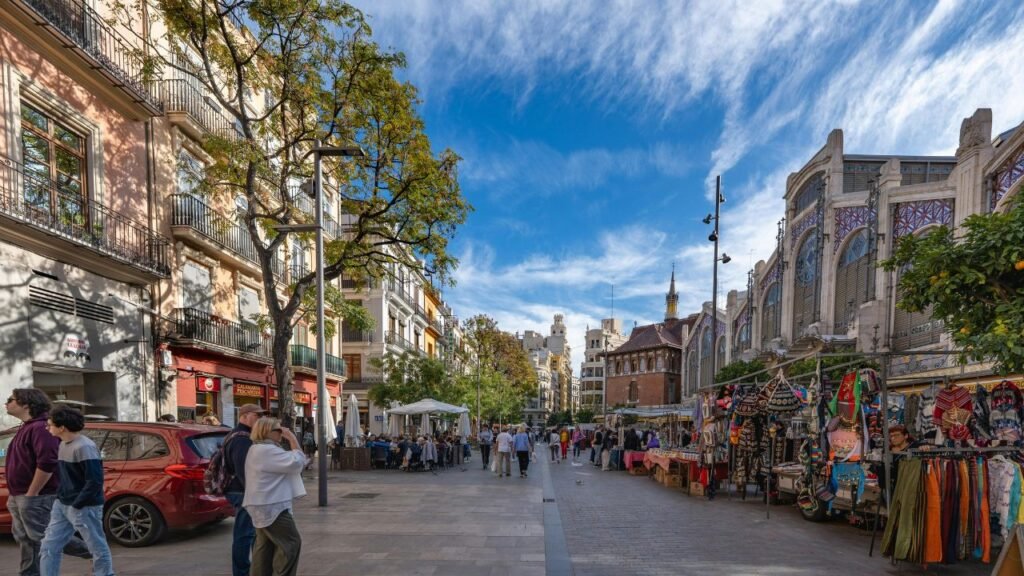
In 1238, King James I of Aragon conquered Valencia, bringing it under Christian rule. This sparked an era of unprecedented wealth. By the 15th century, Valencia entered its “Golden Age,” becoming a Mediterranean economic powerhouse built on silk, trade, and banking. The architecture funded by this immense wealth remains standing today, offering visitors a tactile connection to Spain’s glorious past.
1. La Lonja de la Seda (The Silk Exchange)
If you want to understand the sheer financial dominance of Valencia during its Golden Age, you must stand inside La Lonja de la Seda. Constructed between 1482 and 1533, this masterpiece of late Gothic architecture is a UNESCO World Heritage site and arguably the most important secular Gothic building in Europe.
Walking into the Sala de Contratación (Contract Hall) is a staggering experience. The vaulted ceiling is supported by soaring, spiraling columns that resemble twisting palm trees reaching up to heaven. This was the temple of commerce. Here, merchants from across the globe negotiated massive silk contracts, their voices echoing off the stone. Booking a private guided tour of La Lonja is essential; an expert guide can decode the intricate, often humorous, and sometimes scandalous stone carvings that adorn the facades and doorways.
2. Valencia Cathedral and the Holy Chalice
Built on the site of an ancient Roman temple that was later converted into a Moorish mosque, the Valencia Cathedral is a spectacular architectural timeline. Its construction began in 1262, resulting in a fascinating blend of Romanesque, Gothic, and Baroque styles.
The emotional centerpiece of the Cathedral is hidden in a quiet, ornate side chapel: the Capilla del Santo Cáliz. Here sits an ancient agate cup that the Vatican recognizes as one of the most likely candidates for the authentic Holy Grail—the cup used by Jesus Christ at the Last Supper. Whether you are driven by religious devotion or historical curiosity, standing inches away from an artifact that has inspired centuries of crusades and legends is a deeply moving experience.
Before leaving, challenge yourself to climb the 207 steps of the Miguelete Tower (El Miguelete). The winding ascent rewards you with breathtaking, panoramic views of the city’s terracotta rooftops stretching out toward the sparkling Mediterranean Sea.
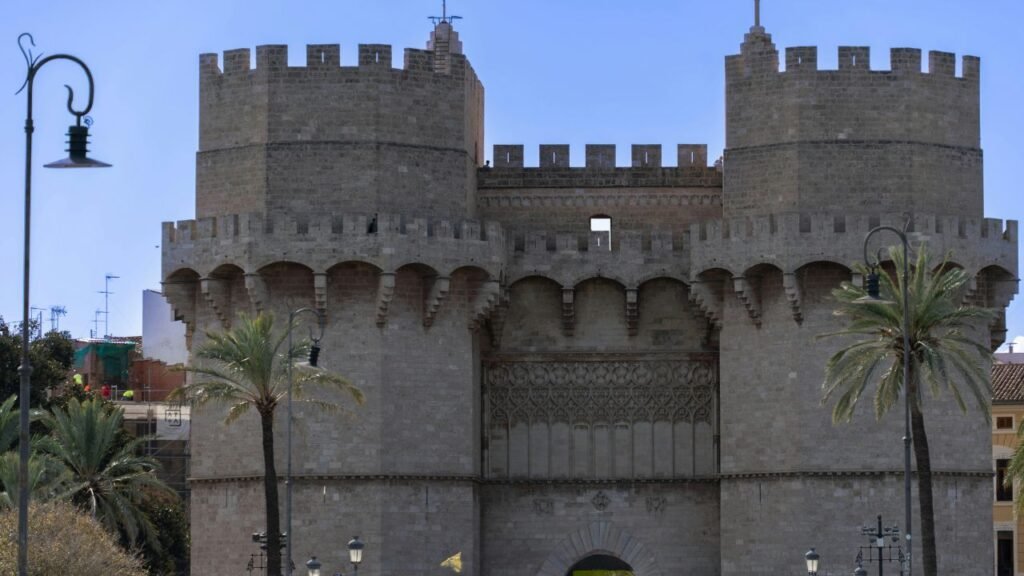
3. Torres de Serranos: The Gothic Gates
In the 14th century, Valencia was enclosed by a massive defensive wall to protect its extraordinary wealth from invaders. While the majority of the wall was demolished in the 19th century to allow the city to expand, the Torres de Serranos remain standing in perfect, imposing defiance.
Find an unforgettable tour in Valencia Spain – Here
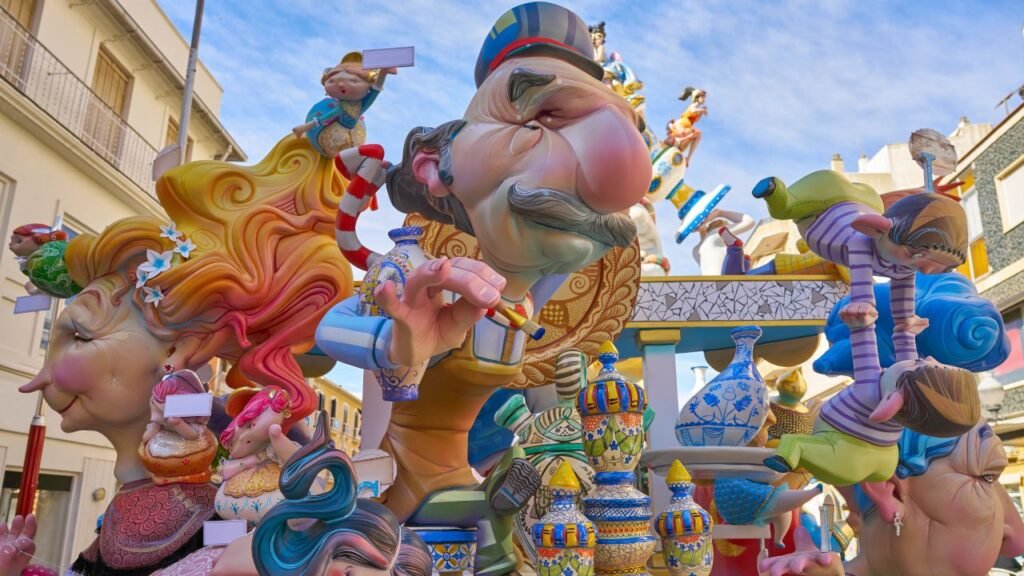
These massive twin towers are considered the largest Gothic city gateways in all of Europe. They originally served a dual purpose: repelling sieges and serving as a grand, ceremonial entrance for visiting kings and ambassadors. Climbing to the top of the battlements offers an incredible vantage point. You can almost hear the clatter of horse hooves and the shouts of medieval guards. Today, they serve as the backdrop for the opening ceremonies of Las Fallas, Valencia’s most famous and fiery annual festival.
4. Mercado Central (The Central Market)
History in Valencia is not limited to silent stones and quiet cathedrals; it is loud, vibrant, and incredibly delicious. The Mercado Central is one of the oldest running food markets in Europe and an absolute triumph of Art Nouveau architecture.
Built in 1914, the structure features soaring iron beams, colorful ceramic tiles, and massive stained-glass domes that flood the bustling stalls with natural light. Engaging a private culinary tour guide here is highly recommended. They will navigate you through the labyrinth of over 1,000 stalls selling curing Iberian hams, massive wheels of Manchego cheese, and the freshest Mediterranean seafood. It is an emotional, sensory overload that connects you directly to the agricultural legacy established by the Moors centuries ago.
5. Tribunal de las Aguas (The Water Tribunal)
Sometimes, the most significant historical landmarks are not buildings, but living traditions. Every Thursday at precisely noon, outside the Door of the Apostles at the Valencia Cathedral, eight men dressed in traditional black blouses gather in a circle.
This is the Tribunal de las Aguas, a judicial institution established during the Moorish era to settle disputes over the irrigation waters of the surrounding farmlands. It has met continuously for over a millennium. Recognized by UNESCO as Intangible Cultural Heritage, witnessing this swift, oral court in action is a rare privilege. It is a striking reminder that the roots of Valencia’s prosperity—water and agriculture—are still fiercely protected.
6. The Turia Gardens (Jardín del Turia)
The story of the Turia Gardens is a testament to the resilience and vision of the Valencian people. For centuries, the Turia River flowed through the heart of the city, bringing both life and devastating floods. After a catastrophic flood in 1957, the government made a bold decision: they diverted the river south of the city and completely drained the old riverbed.
Instead of paving it over for a highway, the citizens demanded a park. Today, the dry riverbed is a lush, 9-kilometer sunken garden that snakes through the city center. Renting a bicycle and riding through the Turia Gardens takes you under ancient stone bridges, past fragrant pine groves, and alongside elegant fountains. It is the green artery of the city, perfectly blending historical preservation with modern urban planning.

7. The City of Arts and Sciences
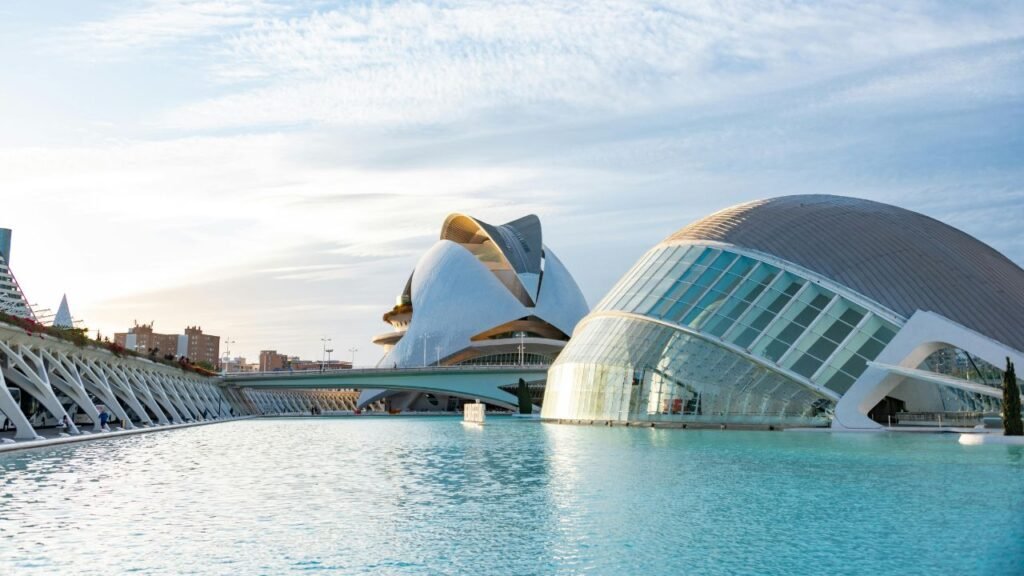
A historical tour of Valencia must conclude by looking toward the future. Situated at the very end of the Turia Gardens, the City of Arts and Sciences (Ciudad de las Artes y las Ciencias) is a staggering, futuristic complex designed by native architect Santiago Calatrava.
From Valencia: Peñíscola Day Trip – Castle, Old Town & Beach
While it was built in the late 20th and early 21st centuries, it has rapidly become Valencia’s most iconic modern landmark. The blindingly white, skeletal structures include an opera house shaped like a Spartan helmet, a science museum resembling a whale skeleton, and the largest aquarium in Europe. Booking an elite architectural tour of this complex provides a stunning contrast to the Gothic cathedrals you explored earlier in the day. It proves that Valencia’s Golden Age of ambitious construction never truly ended.
Elite Travel Intelligence for Valencia in 2026
Designing a high-end trip to the Spanish coast requires strategic planning. Whether you are adding Valencia to a multi-city European rail journey from Paris to Madrid, or flying directly into the region, here is the travel intelligence you need.
- Secure Comprehensive Travel Insurance: A robust travel insurance policy is not just a luxury; it is a mandatory safeguard for protecting your investment. Whether you are traveling from the USA, India, or the UK, ensure your policy covers trip cancellations, luxury baggage loss, and international medical emergencies while in Spain. Premium coverage allows you to explore the ancient ruins and modern marvels of Valencia with absolute peace of mind.
- Invest in Private Expert Guides: The true value of Valencia’s history unlocks when you have an expert providing the context. Skip the crowded audio tours and book private, certified historians who can arrange skip-the-line access to the Silk Exchange and exclusive wine-tastings inside the Central Market.
- Optimal Transit: Valencia is exceptionally well-connected. High-speed AVE trains can whisk you from Madrid to Valencia in under two hours, making it an effortless addition to a larger Spanish itinerary.
Conclusion: Chart Your Own Course
Valencia, Spain, rewards the curious. It is a city where you can touch the chalice of ancient legends in the morning, taste the vibrant Mediterranean harvest at noon, and walk among architectural visions of the future by sunset. Do not just pass through; invest your time here, protect your journey with elite travel insurance, and let the deep, resonant history of Valencia transform your 2026 travels into a masterpiece.
From Valencia: Chulilla, Turia Canyon, Hanging bridges…
We Want to Hear From You! Are you planning to weave the Gothic streets of Valencia into your next European itinerary? Which of these historical landmarks sparks your curiosity the most? Leave a comment below and let us help you plan the perfect journey!
This ПРОVEN tour has 190+verified reviews ⭐⭐⭐⭐⭐
Book now, because it can be sold